Showing posts with label tomatoes. Show all posts

Tuesday, August 25, 2015

High Point of Summer


Here we are in the lush peak of the season and, despite our diminished expectations, our drought-stricken, curtailed garden is nonetheless yielding more produce than we can deal with:


An array of hefty heirloom tomatoes in subtle shades of orange, red, pink and yellow . . .


Three kinds of zucchini in farmer's market quantities . . . and so many bristly cucumbers that we are running out of space in the fridge for the pickling experiments.

Not to mention the best collection of basil ever.

And the backyard even looks good if the camera angles are just right, edging out the dry, scraggly, burnt-brown areas and capturing only the productive beds overflowing with abundance.

Monday, January 7, 2013

Twelfth Night Tomatoes


Every year it's the same thing and every year it's different. Maybe that's the real appeal of gardening. The regular annual cycles provide a way to hold on to the minutiae of daily life, the precious details that slip away unless they are gathered into patterns. Long after you've forgotten what happened last year, a similar milestone shows up and a whole sequence of years comes into sudden focus.

I think that's how it became a kind of ritual to celebrate the last of the tomatoes. And there's usually been a handy holiday to coincide with using up the final few jewels collected from withered vines hanging in the garage.


In 2011 we had tomatoes on Valentine's Day (and beyond); the year before we celebrated with New Year's tomatoes; before that we've had Christmas Eve tomatoes. Part of the ritual has been to see how long the season can stretch, so we've been pushing the celebration later and later. But this year New Year's came and went and I realized we weren't going to make it to Valentine's Day. Last summer wasn't such a great season for our backyard tomatoes and the supply overwintering in the garage was meager to begin with. By this weekend we were down to a handful of Sungolds.

No worries. There was a perfectly respectable holiday just sitting there waiting to be noticed. January 6: Twelfth Night! What does it matter if we have never observed the last of the twelve days of Christmas? It was a fine time for one more feast. Since we were over-feasted and over-feted from the previous twelve days, we settled for a brunch, strictly in-house.


There were enough Sungolds for scrambled eggs with fresh parsley and thyme from the backyard, blending two garden seasons in one festive dish.


B. produced a handsome loaf, so we had homemade whole grain bread.


We also had a King cake, or Rosca de Reyes ("kings' ring") because, well, you know -- Twelfth Night. The Magi arrive bearing gifts. Celebrated with a special cake. I went to a local Mexican market to buy one ready made but the ones for sale there were clearly intended for large extended families. They made me think of the scene in My Big Fat Greek Wedding where the groom's family -- two nervous Anglo parents bearing a small Bundt cake -- comes to meet the bride's family -- a crowd of uncles, aunts, cousins, grandparents, second cousins and two very jovial parents presiding over a large feast.

So I went to Trader Joe's and bought a teeny coffee cake, some cream cheese, and various fruits and nuts to decorate the top. I hid in the cake one of those foil covered chocolate coins, because that's what you do with a Twelfth Night cake, hide a token in it. We weren't exactly sure what it means if you get the piece with the token. In the British tradition it evidently means you are king or queen of the revels; in the Hispanic tradition it means you have to make the tamales for Candlemas on February 2. But it didn't matter because no one got the coin until much later when the leftovers disappeared and whoever got it is not openly admitting to it, perhaps concerned about making those tamales. It wasn't me, I know that much.

Anyway, it was a very fine brunch. We toasted the occasion with goblets of water, the wine of heaven. And the Twelfth Night tomatoes still had their homegrown savor.


Monday, October 1, 2012

Last Chance Zucchini


The zucchini vines have been moldering on the compost pile for some time now. It seemed early to pull them out but they looked so sad I had to put them out of their misery. Nonetheless, the zucchini season lingers on. Last weekend, I was surprised to find a few actual zucchini tucked away in the back of the refrigerator. They looked fine and I felt gleeful: here was a last chance opportunity for Zucchini Flatbread  which we haven't made since the summer of 2011.


We got the recipe from Healthy Bread in Five Minutes a Day (pages 208 and 209) and follow it more or less as given except that I don't really measure the zucchini, parsley, and scallions very closely. Our final batch of zukes, coarsely grated, came to four cups and I used all of it, plus a big handful of backyard parsley, finely chopped, and several scallions sliced thin. And, although the official recipe doesn't call for garlic, I don't feel capable of heating olive oil in a pan without adding several cloves of smashed garlic and swirling them around to infuse the oil with that indispensable earthy essence before putting in the main ingredients.

When the mixture gets soft and the zucchini juices have mostly cooked off (too much juice makes for soggy bread), it's time to throw in a couple of big handfuls of finely grated Parmesan cheese and let it melt gently into the mix.


On impulse I took a look at the website that goes with the book to see if there were any updates, tips, or video instructions for that particular recipe. The most recent post, just the day before, presented a new take on Zucchini Flatbread, jazzed up with roasted cherry tomatoes. Serendipity! And the whole recipe was explained in detail with plenty of big, clear photos. No excuses for messing this up.

It was a simple matter to gather some cherry tomatoes from the yard and put them under the broiler for a few minutes until they started to collapse in on themselves and change color.


Meanwhile, B. was working on the bread part of the recipe. He uses the "five-minutes-a-day" system, and unlike me, follows the instructions carefully. Since he already had a container of dough in the fridge for the next batch of regular bread, all he had to do was pull off a grapefruit-sized lump and squeeze it and shape it into a smooth ball.


Everything came together once he had the dough rolled out and fitted onto our handy oven peel. All I had to do was spread the zucchini-cheese mixture evenly over the surface, sprinkle on some pine nuts (thank you, CostCo!) and dot the roasted tomatoes here and there -- forgetting that you are supposed to hold them back and add them after the flatbread comes out of the oven. Oh, well.

B had preheated the oven to 450 F in plenty of time to warm up the baking stone, about thirty minutes ahead. Then, with an experienced deftness, he slid the decorated flatbread smoothly off the oven peel and onto the heated stone. The long handle on the peel makes this maneuver easy to do despite a really hot oven, although it takes some practice to learn just how much uncooked dry polenta to sprinkle on the peel under the pizza so it will slide off, and just when to give the peel a sharp jerk to start the slide.


The final result was just as delicious as we remembered from the first time. And all the tampering with the recipe -- too much zucchini, added garlic, cooking the tomatoes twice -- turned out just fine.


Friday, August 26, 2011

Better Boy!


Strike up the band! Sound the horn! Beat the drum! Notify the press! Our backyard is fiiiiiinally yielding some ripe tomatoes. Well, one, single, glowingly ripe Better Boy tomato, to be more exact, on this happy summer day of August 26, 2011.


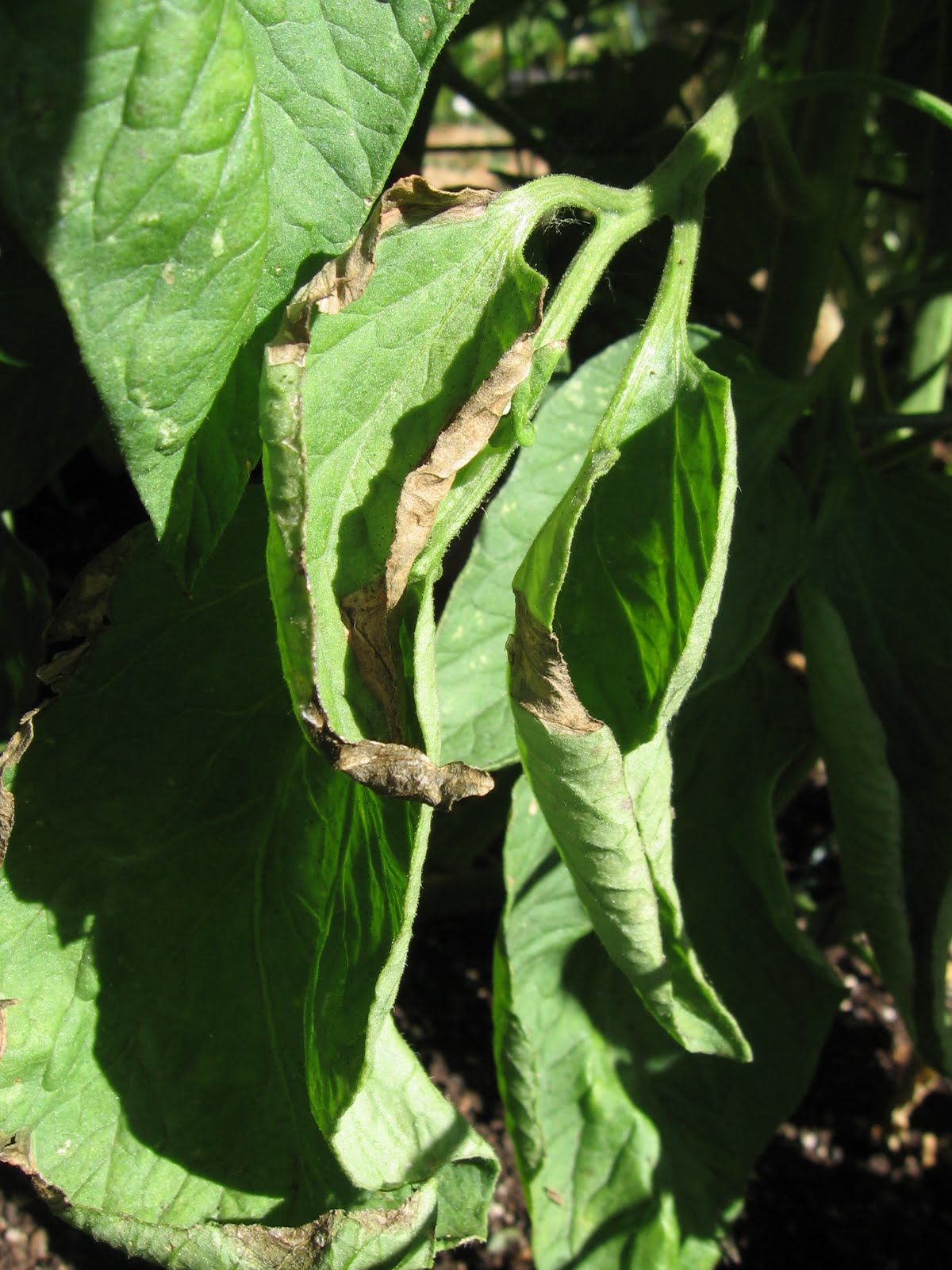
I planted out two Better Boy seedlings on May 9, so it has been a long wait. The plants, with abundant round green fruit, have grown to the top of the eight foot support poles and are poking through the roof trellis. As VFNT hybrids (i.e resistant to verticillium wilt, fusarium wilt, nematodes AND tobacco mosaic virus) they are looking pretty good -- although there are a few brown spots on the lower leaves and some leaves are thickened and curled into themselves.

For years, these have been our workhorse must-have tomatoes. They are harder to find now because of the craze for heirlooms, but I did manage to locate a mail order online nursery in the Midwest (Garden Crossing) that carries them. B. insists on them, and, indeed, they have provided us with many a year of abundant harvests for freezer tomato sauce that gets us through the winters (ah, the grueling Northern California winters).

Better Boys were developed many years ago by a former employee of Burpee, John Peto of PetoSeed. He took with him from Burpee some seeds of a large pink beefsteak variety called Teddy Jones -- which had been one of the parents of the hybrid Big Boy -- and used them in developing his own new hybrid. So I guess the idea is that Better Boy is better than Big Boy, or something like that. Better Boy is -- or was -- a very popular variety with home gardeners and has a place in the Guinness Book of Records as the most productive: one plant yielded 342 pounds of rich red lusciousness.

From the Burpee web site I learned some more factoids about tomatoes in general: They originated in the Andes Mountains of South America and spread throughout Central America and into Mexico. In the sixteenth century they were found by the invading Spanish growing in Aztec king Montezuma's garden. The Spanish brought them back to Europe and the rest is history, some of it occurring in our backyard.

Muchas gracias!!!


Sunday, August 14, 2011

Grafted Tomatoes: An Update


It's mid-August: time to check in with the experimental, grafted heirloom tomatoes. They have almost caught up with the hybrids, which were set out three weeks earlier (May 9 versus May 29). The Japanese Black Trifele plant is the most robust, vining upwards nearly to the top of the six-foot support poles.


The hybrids, for their part -- one Sungold and two Better Boys -- are filling out their eight-foot support tee-pees and have nearly reached the trellis roof. (And I must say that the tomato-guild assortment of companion plants at their base has done well too, forming a living mulch of basil, parsley, marigolds and nasturtiums that glows with variegated shades of green, orange, and yellow in the bright summer light.)


If all the pear-shaped fruit hanging on the Black Trifele plant ripens, we will have the best harvest ever of this smokey-flavored heirloom tomato with its rich, buttery texture. That alone would make the experiment worth the extra cost and effort!


Although there are some minor dead spots along the edges of a few lower leaves, so far this Black Trifele is the most successful heirloom we have grown.


The San Marzano Gigante 3, an Italian paste tomato with a portentous name, is also doing just fine, thank you -- festooned with long, pointed fruit, some of them almost as gigante as my hand.


The lower San Marzano leaves have a fair amount of the brown spots along the edges that appear sooner or later on all the tomato plants we have ever tried to grow in this garden. Eventually the whole leaf turns brown and shrivels up. So far it's hardly noticable unless you peer worriedly into the tangle of marigolds, basil, etc., at the base of the plant -- which of course I do constantly.


Big Beef is also looking good with clusters of mid-size green fruit. This is one of the varieties being tested by Amy Stewart of Garden Rant, and other garden bloggers as well, in controlled trials matching the performance of grafted versus non-grafted versions of the same variety. The preliminary results seem to be encouraging overall, although Amy's right in wanting to wait for the actual eating of the harvest as the last and final measure of success.


Meanwhile, I continue to peer anxiously at browning leaves, my personal measure of tomato perfection or lack thereof. The Big Beef plant has some dead branches but they are at the base and don't seem to be spreading upward in any great hurry.


Brandywine is another story. There are just a few small fruits on a stunted plant that has stopped growing at about three feet in height.


Whole branches are dying off completely. It started on the larger, upper leaves, some of which turned brown all at once and then shriveled. No slow spotting on the edges of lower leaves. No need to peer into the undergrowth. It's a major problem right out in the open. I've never seen this before and I sure hope it isn't contagious! I will remove the whole plant and hope for the best.

Three out of four ain't bad.

Friday, July 15, 2011

Sungold!


These little beauties, the first of the season, added some sparkle to tonight's salad.

They are a feast for all the senses. Translucent orange eye candy, sweetly tangy on the taste buds, with a haunting fragrance that could be marketed as perfume (I always forget, year-to-year, how good they smell, until I find myself going out to the garden just to bury my nose in the fruiting plants again) -- they also feel nice to the touch, smooth and perfect like golden marbles. Do they sound good too? Well, to me, the evocative name falls poetically on the ear: Sungold!

For the record: This year's one Sungold plant was an organically grown, hybrid F1 seedling from Natural Gardening, set out on May 9 with marigold, basil, and parsley seedlings, plus a few nasturtium seeds poked in the ground here and there. The days-to-maturity was given as 57 days, which is a couple of weeks earlier than this plant's first fruits -- but the DTM is always an estimate.

So far, all the companion plants are doing well, too. The only problem to date is that the lower leaves on the tomato plant are showing the brown spots and progressive deadening that appears every year no matter what I do. But, right now, I don't feel like quibbling about the details. Let's just admire the results.

Friday, July 1, 2011

Grafted Tomatoes: An Experiment


Grafted tomatoes? Grafted fruit trees make sense, of course, because they last for decades. But why go to the trouble of joining a vigorous, disease-resistant rootstock to the delicate stem of a coveted variety in an annual that will be pulled up after a few brief months? In the photo above you can see the join where two different tomato plants, rootstock and scion -- the top part -- have been painstakingly bonded together through a lengthy process which requires highly specialized growing conditions.

This approach might make more sense than seems evident at first. Grafted vegetables of all types are common in Europe and Asia and are in use among commercial growers in this country. There are notable advantages to strong, healthy, high-yielding plants that can adapt to changing weather and produce lots of the tender heirloom veggies we love to eat.

I first learned all these fun facts about grafted tomatoes last summer from Amy Stewart of the seminal, rabble-rousing blog Garden Rant. It was too late in the season to do anything more than scour the internet for additional information and vow to track some down for 2011.

Our particular Sonoma County micro-climate allows for growing good tomatoes. However, our particular backyard has boggy black clay soil which is very fertile but doesn't drain well and harbors disease. Tomatoes seem especially susceptible. Every year our plants are gradually afflicted with thick curled leaves marked with brown spots. The process starts with the bottom leaves and works slowly upward. It never reaches more than a third of the way up, doesn't kill the plant, and we pick plenty of tomatoes, but it's sooooooo discouraging to watch helplessly as it climbs inexorably, leaving dead branches behind. It affects heirlooms most but doesn't spare the hybrids and doesn't seem to be controlled by rotating the beds each year.

So, when the Territorial Seeds catalog arrived earlier this year from Oregon, with -- surprise! -- a page full of tempting grafted varieties, I ordered six plants, admittedly a bit of a splurge, because the grafted seedlings are about twice as much as regular vegetable starts. Like most backyard tomato growers, I lose judgment when rainbow visions of green vines heavy with jewel-toned heirlooms float before my eyes.

Due to this spring's prolonged chilly, wet weather on the West coast, the plants arrived a couple of weeks later than planned and did not look very good when they got here. All of them were spindly with pale stems and curled, pale leaves; a couple had grown too tall for the shipping box and were broken off at the top. Dilemma: should I send them back and call off the experiment? No. Why wait another whole year to make the trial?

Now I'm grateful to myself for the decision to forge blindly ahead.


I planted out four seedlings and gave two away to a good home. The Brandywine and Japanese Black Trifele pictured above went into the ground on May 29.


Here they are today, a month later. Looking good!


Here are Big Beef (on the left) and San Marzano Gigante 3, planted out at the same time. All of the grafted tomatoes are now about two feet tall and thriving. My friend who took in my two leftover seedlings says his little foundlings are doing just fine.

The grafted tomatoes are running behind our other tomatoes planted on May 9, three weeks earlier: two Better Boy hybrids from Garden Crossings mail order nursery in Michigan (the only place we could find our tried and true favorite workhorse tomato), and the can't-do-without organic Sungold (an F1 hybrid) from our local Sonoma County mail order nursery, Natural Gardening. These "control" plants are now about four feet tall with flowers on both varieties and tiny first fruits on the Sungold. They are also showing the first tell-tale signs of leaf thickening and curling, with accompanying brown spots, just a few here and there on lower leaves.

It's a pretty informal, haphazard experiment. Fortunately, others are conducting much more organized trials.

Amy Stewart is back with an account of a sponsored test she is running in her yard. The wholesale nursery Log House Plants sent her a grafted Big Beef and a non-grafted version. They are set up in identical containers, ready for the grow-off.

I will be following her reports with interest, and watching what happens in my own yard.

Monday, May 23, 2011

Tomato Guild


The permaculture concept of planting in communities or "guilds" has intrigued me ever since I first learned about it. Today I put together a permaculture-for-dummies installation including tomatoes (the tomatoes were already there) and a few of the beneficial companions said to enhance their growth: marigolds, basil, parsley, and nasturtiums. Whether the purported mutual benefits are science or merely lore, I do not know, but it makes an attractive grouping and I look forward to seeing how it fills out.

Here are the members of this guild, nestled together in a nine-foot-square raised bed:

1. Better Boy hybrid seedlings from Garden Crossing mail order nursery (Better Boys, B.'s favorite, are getting harder and harder to find. This is the first time we had to resort to online shopping to locate some.) The tomatoes are the lead plant in the guild. These were planted out May 9.

2. Queen Sophia marigold seedlings from Natural Gardening. The roots deter nematodes.

3. Genovese basil seedlings from Natural Gardening. Who could imagine tomatoes without basil! It's said to improve flavor not just in the kitchen but in the garden too. The flowers attract beneficial insects. It's edible. Being pesto lovers, we grow it as a crop in its own right. B.'s most frequent comment on the garden: "Not enough basil!"

4. Italian Flatleaf parsley seedlings from Natural Gardening. I'm not sure what parsley does but it's always on the guild lists for tomatoes. Edible.

5. Moonlight nasturtium seeds from Renee's Garden. Nasturtiums deter pests, draw beneficial insects, and are edible.

As I understand it, a true guild is based on perennials and ideally starts with trees, but hey, you garden with the plants you have, with the materials at hand, and with the time available. I've discovered that the best way to learn new things in the garden is to start some small scale experiments and see where they lead.

Tucked in with all the seedlings and seeds in this bed are two sunken clay pots filled with water and covered with the pot's own drip dish turned upside down to form a lid. This was an experiment from several year's back that has yielded good results. The pots provide a steady water supply close to the root zone as the water slowly seeps through the clay walls, responding to the moisture level in the surrounding soil. I think the plants like this system because when I pull the pots out at the end of the season the hole is lined with a thick netting of pale roots.

Here's hoping this tomato installation becomes a happy little cul de sac in the larger garden community.

Saturday, February 19, 2011

The Last of the Tomatoes


I used to marvel at Christmas tomatoes and make jokes about New Year's tomatoes. Then, as I learned more about how to extend the tomato season and store some dangling branches in the garage, I would marvel at New Year's tomatoes and make jokes about Valentine's Day tomatoes.

Yet here we are, post Valentine's Day, and there are still a few hangers-on, a little wrinkled but still cheerful (like me and my friends!), ready to spark up a salad. It's a marvel.

Friday, December 31, 2010

New Year's Eve Tomatoes


At the closing of the year we are still putting tomatoes in the nightly salads: just a few to make them last as long as possible. Of course, in dark December they don't have the rich flavors of August, yet somehow the minimal spark they provide pulls together the lettuce, spinach, and arugula into a unified burst of flavor.

The hanging vines out in the garage are picked over and bedraggled, so this won't be going on much longer. It's been a good run.

Thursday, November 4, 2010

Insanely Great Pasta Sauce


It was the continuous supply of eggplant that led to B.'s latest culinary breakthrough. Even though the season is just about over (after all, it's November!), the memory lingers on and will provide inspiration for next spring's planting decisions.

Two plants of Hansel eggplant and two of Fairy Tale produced gorgeous platefuls of glossy purple fruit that sat around on the dining room table, just asking to be made into something wonderful.


It wasn't the best season ever for tomatoes but there were still enough on hand (Early Girl, Black Trifele, Sun Gold, Yellow Pear) to fill their own plates and provide their own entrancing palette of color.


Since they were meant to be together -- like moonlight and music -- it was only a matter of time before they ended up simmering together in the same pan with some olive oil and crushed garlic. The little Fairy Tail teardrops didn't even need peeling, they were so tender. They disappeared completely into the sauce. The Hansels were peeled and sliced up and cooked until soft along with the tomatoes.

Sometimes B. would blanch the tomatoes first to get the skins off, and sometimes just quarter them and set them in the pan, skins and all. Pictured above is a skins-on batch. Whole basil leaves, just picked, were added towards the end of the cooking time.


Voila! A sauce that is so utterly simple yet subtle and rich with the tang of fresh tomatoes and the smokey undercurrent of eggplant, so silky it coats the noodles with flavor that lingers in the mouth and in the mind.


Another approach that draws out of the savor of the eggplant even more is to roast them whole for an hour in the oven. Just cut off the tops and prick them with a fork, coat lightly with olive oil and set them on an oiled baking sheet. Take them out when soft and collapsing into themselves, slit them open and squeeze out the yummy paste.


The eggplant is then combined with oven-roasted tomatoes. These were cooked for half an hour in an iron skillet with a layer of olive oil and some crushed garlic. When done, set the skillet on the top of the stove, add the eggplant paste and simmer gently until the mixture forms a sauce.


The roasting method produces a smoother sauce because all of the eggplant disappears into the magical meld of mouth-watering goodness.

Whatever route you take to get there, it's an insanely good pasta sauce.

Tuesday, December 8, 2009

Everything's Frozen!


This morning, a little before eight, the backyard was a California version of a sparkling winter wonderland. All the greenery was still green but with a new and silvery aspect, stiffened by rhinestones of frost. The water in the birdbath was frozen solid with golden locust leaves suspended in the ice.


A dramatic seasons end for the pepper plants, also finally for the cherry tomatoes. Nasturtiums and basil were already on the way out.

The lemon tree, however, looked fine under its boxy blanket. I took the box off during the day and for tonight have covered the plant with frost protection cloth. We'll see how that works. Tonight will be just as cold.

Saturday, December 5, 2009

December Blossoms


We have had no heavy frost yet. I think there were some light frosts in the last few weeks because the basil has dark spots on it. But the nasturtiums and other plants that don't usually survive being frozen are thriving.


The morning glories have started blooming again and there is actually a red ripe cherry tomato on the still growing volunteer plant. I've seen big green and red tomatoes in neighbor's yards.


The sungolds are showing another spurt of growth. I can't remember when the heavy frosts hit last year, but this seems late to still have a garden full of summer-blooming plants.

Thursday, September 10, 2009

Tomato Extravaganza


By Labor Day, last Monday, the tomato situation was getting critical. It was quite clear that soon there would be tomatoes tucked away onto bookcases (which has happened before) and in the bathroom cabinet (which has not happened so far). The photo above shows everything on hand on Monday afternoon -- mostly Better Boys, lined up from ripest on the left to just-picked, still-slightly-orange on the right.

There are also bowls of Sungolds and the volunteer red cherry tomatoes for snacking and salads, and two demonstration Black Krims at lower right, just to show we are capable of growing heirlooms.


A plethora of Better Boys means it's time to go rummaging in the garage for the mighty Squeezo, the venerable Vittorio Strainer, veteran of many a tomato sauce session of Septembers past. It didn't take long to clean it up from its long hibernation and attach it to the dining room table.

The whole process is so simple. The ripe tomatoes are first rinsed and quartered. (Let the orangey ones sit for another week to ripen up.)


Then all you have to do is fill the hopper with tomato pieces, press them down with the mallet, and turn the handle to push the juicy mass through the screening funnel. Skin and seeds drop out at the end of the funnel while the luscious juice and pulp flows down the trough into a bowl.


The next step is to cook the juice down a bit and package it up in pint size freezer containers as a base for tomato sauce. Take some out in gloomy November or in chilly February and make it into sauce for a vivifying taste of congealed sunlight, a distillate of summertime itself.